


Using AI for Content Creation? Here are 3 Ways To Keep It Authentic
No items found.

March 24, 2025

AI is dominating the conversation in content marketing, and for good reason.
It’s fundamentally changing how we approach writing with its capabilities to streamline workflows and make content production more efficient.
But it’s also raising an important question: What does the role of a content creator look like in an AI-driven world?
The answer is simple. AI isn’t replacing content creators. It’s redefining how we work.
Great content that drives real business results isn’t just about putting words together. It’s about storytelling, strategy, and connection. Those are the things that make content effective, and they’re still very much human responsibilities.

To put this into perspective, AI played a role in shaping this blog post, but it didn’t write it.
We didn’t type a prompt, copy the output, and hit publish. It took some real shaping with human ideas to get it where it is now so that there is real value for you, the reader.
The challenge isn’t whether to use AI. It’s how to integrate it in a way that enhances efficiency and creativity without sacrificing quality.
What Bad AI-Generated Content Looks Like
We've all seen that lack of quality: the soul-less blog posts, the off-putting LinkedIn posts that missed the mark, and the AI images that feel horror-movie-esque.
Then there are the telltale AI giveaway words: critical, delve, game-changer, navigate, landscape, realm, etc. It’s the kind of language that might sound polished—but it completely lacks personality. (Do you see that em dash?)
Before we dive into how to create authentic, results-driven content with AI, it’s important to recognize the limitations of AI-generated writing. Knowing what to watch for will help you refine AI-generated content, shape it to fit your brand, and ensure it stays engaging and effective.
Here are some of the biggest red flags of bad AI content.
AI Gets Facts Wrong (And Sounds Confident About It)
Arguably the most important part of responsible use of AI is proper fact checking.
AI pulls from vast amounts of data, but it doesn’t actually know anything. It can mix up facts, present outdated information, or even invent things that sound believable but aren’t true.
It Sounds Robotic and Off-Brand
Your audience can spot bad AI writing from a mile away.
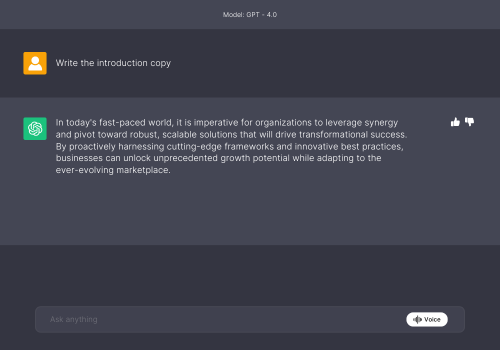
It’s either too formal, too generic, or weirdly structured. Sometimes, AI tries to mimic human speech but misses the mark, leading to unnatural phrasing and awkward sentences.
You’ll also notice words that feel out of place or terms that aren’t commonly used in everyday conversation or natural writing. We mentioned some of the classic AI giveaway words earlier, but another issue is how AI misuses them.
Take critical, for example. AI throws it around freely, but in reality, most things aren’t actually critical. The result? Content that feels exaggerated, unnatural, or just plain off.
It Misses Cultural and Contextual Nuances
AI doesn’t experience the world like we do. It doesn’t pick up on evolving social conversations, understand cultural nuances, or recognize humor beyond the data it has been trained on.
This lack of lived experience means AI-generated content may sabotage content marketing efforts instead of supporting it.
As human content creators, we know that a phrase that seems harmless in one cultural context could be offensive in another. AI doesn’t have the ability to read the room, meaning it can miss the subtleties of timing, trends, and the emotional weight certain words carry.
AI Repeats Itself or Copies Existing Content
AI doesn’t plagiarize on purpose, but it also doesn’t think like a human.
Instead of coming up with truly original ideas, it predicts patterns based on the data it has been trained on. This means AI-generated content often sounds repetitive, unoriginal, or eerily similar to existing content.
For responsible AI writing, it's important to make sure you're aware of these risks. Duplication, misinformation, and weak messaging is causing low-value content and worse, audience frustration.
Google and Other Search Engines Are Watching
Search engines are getting better at detecting AI-generated content, and they aren’t rewarding low-quality, generic copy.
Google’s priority is useful, engaging content that provides real value to readers. If your AI-written content is repetitive, lacks depth, or is stuffed with keywords instead of insights, it’s not going to perform well in search rankings.
3 Ways Our Team Leverages AI to Create High-Impact, Results-Driven Content
Bad AI-generated content can damage credibility, frustrate audiences, and even hurt search rankings. But that doesn’t mean AI isn’t useful.
When used correctly, AI can be a powerful tool to enhance creativity, improve efficiency, and support content creation without sacrificing quality.
So, how do you take AI-generated content from mediocre to meaningful?
At Hypelocal, we treat AI as an assistant or a junior copywriter. AI-generated outputs are massaged, edited, and refined so that the end result is high-quality content that actually works.
Here’s how we use AI:
1. Skip the Writer’s Block Stage
Staring at a blank page is every writer's nightmare.
You have an idea, but getting started feels like a monumental task. The dreaded white page syndrome spares no one. But AI can help you move past that initial creative block.
Instead of forcing inspiration, we use AI to generate topic ideas, create outlines, and draft rough copy.
This allows focus on refining and elevating the content instead of getting stuck at step one. We treat AI as a starting point, not a shortcut.
Here is a prompt we’ll sometimes use to get started:
2. Use Smart Prompting to Get a Better Output
A good prompt can be worth its weight in gold because AI is only as good as the instructions you give it. They should be clear, focused, and intentional.
Our strategic approach at Hypelocal includes using proven prompts to guide AI’s output, reduce inaccuracies, and ensure the content is properly aligned with an intention. We share our best ones with each other company-wide to further improve our final product and our overall efficiency.
There are several commonalities in the ones we share. And some of these, you’ve no doubt heard before:
Give AI a Role
Tell the AI tool exactly what you want them to be. Here are some examples:
Provide an Example
Give AI the right context to work with.
Many tools like ChatGPT now allow you to upload reference documents so that AI can predict and match the tone and style of the brand. You can also do this directly in the prompt by adding messaging notes, tone preferences, or even an example of past content.
The more specific you are, the closer the AI will get to producing content that aligns with the content’s objective.
Give Rules and Systems for AI to Follow
AI is a powerful tool, but it works best when given clear guidelines.
Instead of letting it generate content based on vague instructions, provide it with structured frameworks and proven systems to follow. This helps ensure the output is more strategic, targeted, and aligned with high-quality writing principles.
For example, if you’re writing marketing content, you can instruct AI to follow:
- The Stages of Awareness: Direct AI to tailor messaging based on whether your audience is problem-aware, solution-aware, or ready to buy.
- David Ogilvy’s Copywriting Rules: Ask AI to apply principles like clear headlines, compelling storytelling, and benefit-driven writing.
- AIDA (Attention, Interest, Desire, Action): Structure AI-generated content using this classic marketing framework to target a specific audience or make it more persuasive.
By giving AI rules to follow, you’re guiding it to create high-quality, strategic writing that serves a purpose.
More Fact-Checking
AI is confident, even when it’s wrong.
It has a habit of making up statistics, misquoting sources, and presenting outdated information as fact.
That’s why we use this one phrase more than any other in our AI-assisted content development:
This extra step signals to the AI that accuracy is a priority, reducing the chances of fabricated or misleading information.
While it doesn’t eliminate the need for fact-checking, it adds an extra layer of reliability which helps to filter out inaccuracies before they even reach your screen.
3. No Copy-Paste-Publish. Ever.
AI always needs oversight, refinement, and a strategic touch before it’s ready to go live.
Every AI-generated piece we use goes through a structured human editing process. No copy-paste-publishing. Ever.
Our refinement process is detailed, combining proven prompts with human intuition.

Mapped out, it looks like this:
Our 10-Step Approach to AI-Assisted Content Generation
- Define AI’s Role: Decide how AI will support your writing process—outlining, drafting, or both.
- Provide Training: Share brand context, frameworks, and style guidelines so the AI produces aligned content.
- Topic Ideation: Use back-and-forth prompts with AI to identify a focus keyword and develop a big idea worth exploring.
- Develop Outline (With Raw Input): Gather your research, notes, and relevant data, then prompt AI to shape a structured outline with those materials.
- Finalize Outline: Refine the outline until it highlights the key points and flows well.
- Create First Draft: Have AI generate a first draft based on your approved outline, keeping SEO and user experience in mind.
- Refine First Draft: Combine SEO tools (like SurferSEO) and your own edits with AI’s to strengthen clarity, polish tone, and match your brand voice.
- Go Section-by-Section: Make strategic edits—both human and AI-assisted—to ensure each section delivers high-quality information.
- Complete the Draft: Merge your edits into a cohesive version, closing any content gaps and verifying accuracy.
- Final Review: Give the piece one last check—both AI-assisted and human—for factual correctness, engagement, and brand alignment.
More often than not, the hands-on refinement work is being done to:
- Inject Personality and Brand Voice: AI output often sounds stiff or generic. A real writer needs to refine it—especially intros, outros, and transitions—so it feels natural and in line with the brand.
- Remove AI Awkwardness: AI-generated phrasing can be clunky, repetitive, or just boring. Editing ensures a smoother, more engaging read that people actually want to read.
- Do a Culture Check: AI doesn’t have real-world experiences. We take an extra moment to evaluate whether the content fits the intended audience. If something feels off, it probably is.
- Cut the Fluff: AI tends to over-explain or pad sentences with unnecessary words. If it doesn’t add value, we cut it.
This is how create AI-assisted content that upholds a high standard to ensure that everything we publish is engaging, well-structured, results-driven, and valuable to an audience.
AI Helps, But Human Creativity Can't Be Replaced
AI is changing the way we create content, but one thing hasn’t changed: Great content still requires human creativity, strategy, and oversight.
AI can help streamline the process, generate ideas, and optimize workflows, but it can’t replace the depth, authenticity, and insight that only human writers bring to the table.
We use AI to enhance content creation, not replace the person behind the work. Every AI-assisted piece we publish is refined, shaped, and fact-checked to align with our brand, engage our audience, and deliver meaningful results.
The one thing we hope you take away from this post is to keep your standards high, refine every AI draft, and never lose sight of the human element that makes content impactful.

You may also like

Demand Generation Marketing
October 10, 2024
The Secret to Generating More Demand? Start with Market Analysis
Drive profitable demand generation with a thorough market analysis. Learn how to evaluate trends, competition, and customers.

Case Study
September 29, 2025
How Hypelocal Won Over An Online Jewellery Retailer With A 937% ROAS
Hypelocal’s ad strategy provided this jewellery retailer with $420K revenue and 937% ROAS.
Get in Touch

