


How A Home Service Company Doubled Revenue

Trent Walker
This is some text inside of a div block.

November 24, 2024
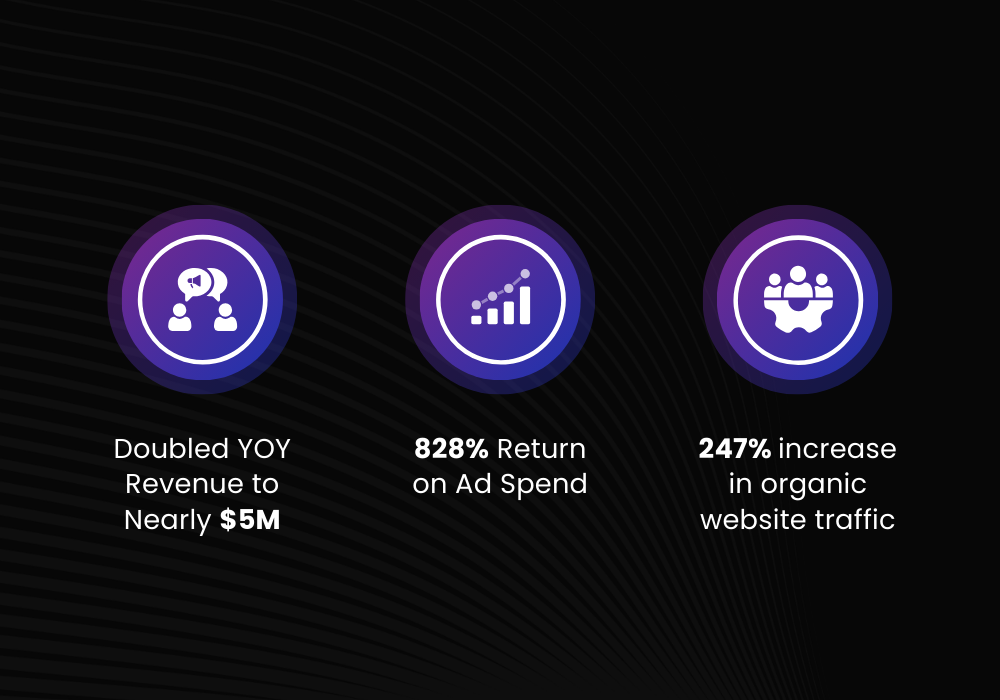
An 828% Return on Ad Spend and Double the Revenue for a Home Services Business
With Hypelocal’s full-funnel digital marketing strategy, we helped a home services client double their year-over-year revenue. By revamping their online presence, optimizing their conversion funnels, and running high-performance Meta and Google ad campaigns, we delivered an 828% return on ad spend and surpassed lead generation goals by 57%.
Company Challenge
This is the story of overcoming a big, yet common challenge in digital marketing: a lack of return on investment.
Here’s how it happened…
We were introduced to a potential client whose digital marketing and paid advertising efforts weren’t delivering the scalable, positive return they needed to grow their business.
With ambitious goals of expanding into new markets and nearly doubling their annual revenue, this home services company needed to maximize their digital marketing investments.
How We Helped
Our solution was to overhaul their entire online presence and paid advertising strategy, focusing on clear messaging, funnel optimization, and a multi-channel paid media approach to drive leads and generate revenue.
By creating a full-funnel demand generation strategy, optimizing their website for higher conversion rates, and running high-performing Meta and Google Ads campaigns, we were able to exceed their lead generation goals and significantly improve their revenue—all while maintaining an impressive return on ad spend.
Results and Impact
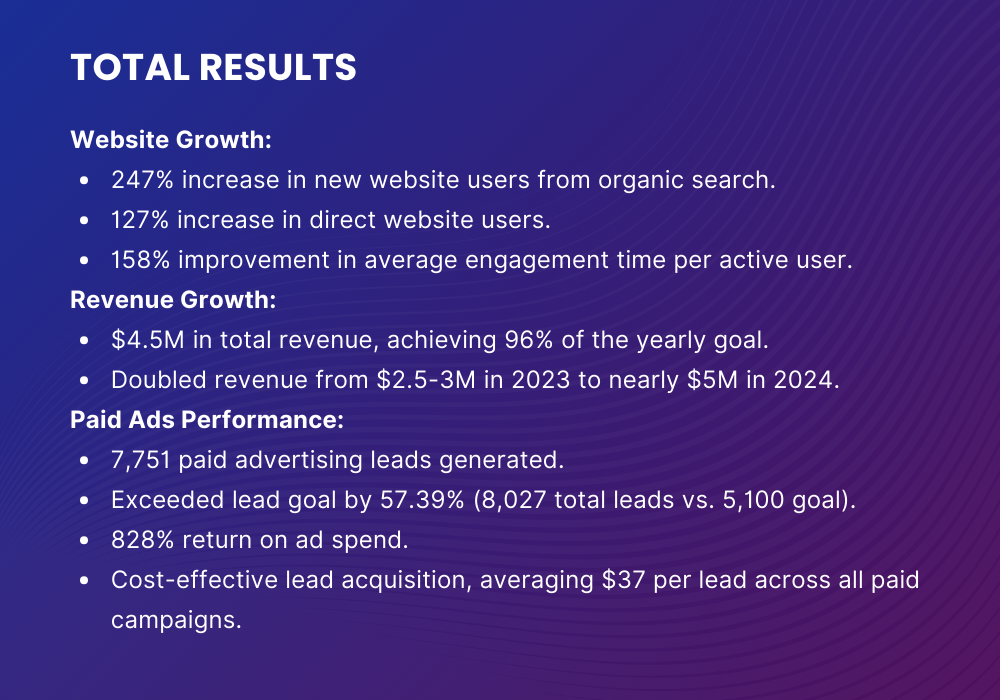
Here are the results of those campaigns:
How Hypelocal Did it
To generate these kinds of results, we built a full-funnel strategy to transform our client’s business from messaging to revenue growth.
Messaging Strategy
We began by building out a Core Messaging Development Document.
This is the foundation of all future communication. Instead of sending the client a questionnaire, we sat down with them to interview and extract the most impactful details about their business.
Our hands-on approach helped us go deeper than surface-level messaging and produce a detailed 22-page document. This became the single source of truth for the website, advertising campaigns, and emails—ensuring consistency across all channels.
Click here to download our free Core Messaging Template.
Core Funnel UX & CRO Optimization
Once the messaging was approved, we began work on the new website and sales funnel.
By optimizing the site for conversions with persuasive copywriting and a user-friendly design, we set the company up for long-term SEO success.
Here are the results of our efforts from March 2024 to September 2024:
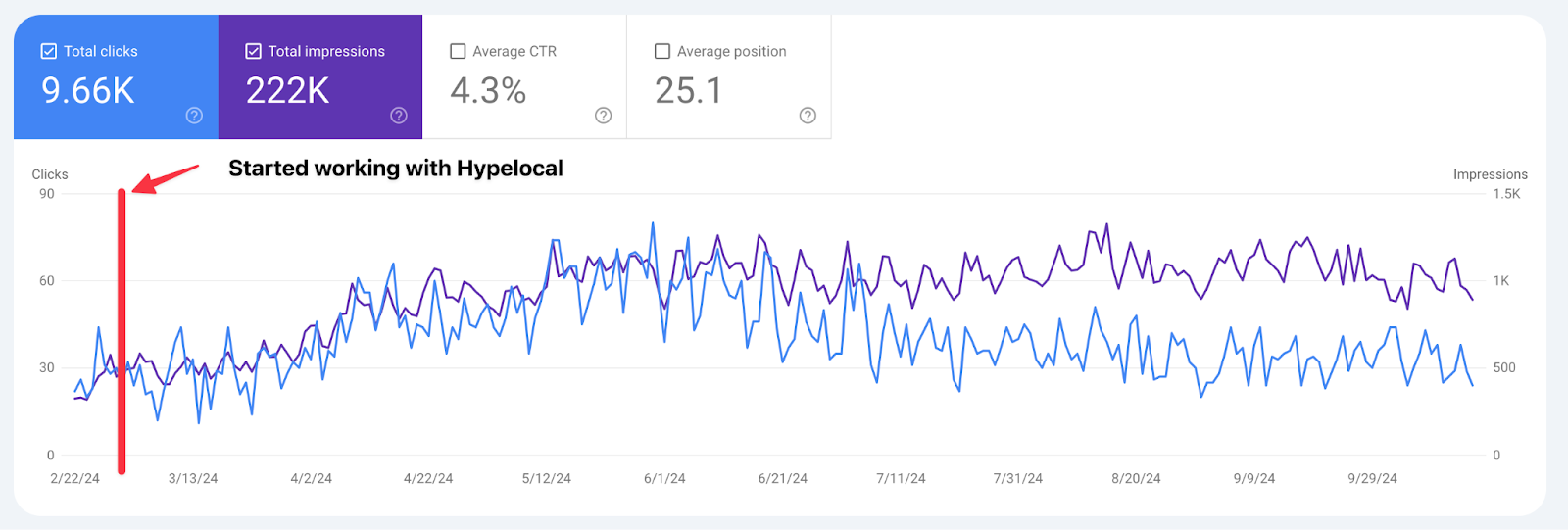
- 247% increase in new website users from organic search.
- 127% increase in direct users.
- 158% improvement in average engagement time per active user.
- 8,027 total new sales inquiries.
Click here to download our free Core Funnel UX & CRO Optimization Template.
Paid Advertising Strategy: Implementation and Optimization
To drive scalable growth and drive revenue for our client, we created a full-funnel demand generation strategy using paid advertising to generate quote inquiries from our target audience across our four key markets.
This resulted in:
- 7,751 directly attributed paid advertising leads.
- $37 average cost per lead across all campaigns.
- 828% return on ad spend (ROAS) from cost to acquire a job and total job revenue.
Meta Ads (Facebook & Instagram):
For the Meta ads campaigns, we implemented a full-funnel strategy that targeted key markets with precision.
We structured the campaigns to test multiple variables, including audiences, creative themes, and messaging, allowing us to optimize performance and scale efficiently. By constantly experimenting with different ad sets and creative approaches, we identified top performers that drove engagement and conversions.
Our ongoing process of refining audience targeting, ad copy, and visual assets ensured we were always improving—preventing performance fatigue and maximizing the effectiveness of the campaigns. This methodical approach allowed us to continuously generate high-quality leads while maximizing the client’s ad spend.
This resulted in:
- Over an eight-month period, our Facebook campaigns generated 6,699 quote requests.
- We maintained a cost-effective $29 cost per lead.
- Our ads directly resulted in more than $2 million in closed revenue.
- In total, we ran 753 variations of advertisements to identify and scale the best-performing creatives.
We built 11 campaigns across four distinct markets, each designed to test multiple variables, optimize performance, and scale efficiently.
We structured the campaigns with a dozen different ad sets to test and control for various performance factors. This allowed us to allocate budget to top-performing ad sets based on live data and results.
Throughout the campaign, we ran experiments on key elements:
Conversion points
We tested different landing pages and call-to-action strategies to identify which were driving the most engagement and conversions.
Audience experiments
We started with a broad audience to cast a wide net. Then we tested a range of segments, including custom lookalike audiences and interest-based stacks on Facebook.
After gathering several months of data, we refined our audience, cutting out ad demographics and platform placements that were underperforming.
Creative strategy
Our creative strategy revolved around testing multiple themes to find the strongest performers.
These themes included:
- Us vs. Them comparisons.
- Before vs. After transformations.
- Top Benefit Single Headline static images.
- 30-second “product process” video to showcase key features.
- Feature call-out static images and videos.
For each theme, we tested three to six creative variants. After several weeks of gathering performance data and running iterative tests, we were able to identify the top-performing creatives.
These high performers were then moved into a "Scaling" ad set, which received the bulk of the advertising budget, allowing us to scale while maintaining efficiency.
We continuously allocated a smaller portion of the budget for ongoing experimentation. This testing phase allowed us to explore new creative concepts in an “Experiment” ad group, challenging the top performers to ensure that we didn’t see performance fatigue.
Messaging Strategy
Alongside our creative tests, we implemented a rigorous messaging strategy. The goal was to move prospects from unaware or problem-aware to solution-aware, guiding them along the funnel with persuasive, curiosity-driven copy.
Our messaging focused on creating intense curiosity and demand for the product that would traffic to the landing page. Here, users could find all the sales information they needed to proceed with a quote or consultation.
We tested multiple outcomes and benefits drawn from our core messaging strategy to ensure the copy resonated with the target audience.
Optimizations
Early testing of multiple ad aspects—audiences, creatives, messaging—allowed us to optimize quickly.
We established clear performance benchmarks for each ad set, including conversion rates, cost per lead, and click-through rates (CTR).
Our optimization process followed these steps:
- Ads that fell below average performance metrics were paused.
- Budgets were shifted toward top-performing ads to scale quickly.
- New tests were introduced continuously in the “Experiment” ad group to identify fresh opportunities for optimization and growth.
As mentioned above, we created a dedicated “Scaling” ad group to effectively scale the best-performing creatives. This group received the majority of the budget, allowing us to maximize results with proven ad sets.
Meanwhile, the “Experiment” group kept our campaigns dynamic by testing new creative ideas, preventing stagnation and improving performance month over month.
Google Search Ads
For our Google Search Ads strategy, we built a robust campaign structure designed to capture high-intent traffic and convert it into qualified leads.
By creating campaigns around specific keyword themes and continuously optimizing for performance, we drove substantial results, achieving significant growth in both lead volume and conversion rates:
- 1,201 quote requests were generated across all Google Ads campaigns.
- We drove over 21,000 clicks to the landing pages from search ads.
- The overall conversion rate from click to quote request form fill was 6.56%, a strong indicator of the quality of the traffic we were targeting.
Campaign Structure
We launched 44 campaigns across four key markets, with each market featuring ten campaigns.
Each campaign was broken down by specific keyword themes, which allowed us to target distinct customer search intents. Our approach was based on thorough keyword research, which revealed 10 key themes worth testing.
Thorough keyword research was critical in identifying and testing multiple keyword themes, ensuring we captured all relevant search traffic while optimizing for cost-effectiveness.
Optimizations
Our optimization process was data-driven and iterative.
After the first two to four weeks of running the campaigns, we analyzed performance to identify which keyword themes were driving the highest-quality quote requests. We then adjusted our strategy accordingly:
- Shifting budget: Once we identified the highest-performing campaigns and keyword themes, we reallocated the majority of the budget to those campaigns.
- Ad copy testing: We continued testing different variations of ad copy to see which messages resonated most with searchers and generated the most conversions.
- Negative keyword research: Ongoing negative keyword research was crucial to filter out irrelevant traffic and ensure our client’s budget was only spent on highly qualified searches.
Report & Visibility Into Lead to Closed Revenue
To keep the client informed and fully in control of their data, we implemented an automated reporting system using Looker Data Studio.
This provided real-time visibility into all key performance metrics across every channel—website performance, SEO, Meta Ads, and Google Ads. By consolidating all this data into one dashboard, the client could easily track the progress of their campaigns, evaluate performance, and make informed decisions based on comprehensive insights.
Each month, we provided a detailed End of Month (EOM) report, which highlighted key achievements, broke down performance across all channels, and outlined strategies for the upcoming period. This not only gave the client transparency into the work being done but also allowed us to continuously refine and optimize based on the latest data.
Our goal was to ensure the client had full visibility from lead generation to closed revenue, making it easier for them to understand how our efforts directly impacted their bottom line.


Faster Growth Guaranteed
By combining a clear messaging strategy, optimized user experience, and data-driven paid advertising, we helped our client not only double their revenue but also establish a scalable foundation for continued growth.
While we’re proud of what we accomplished for our home services client in this case study, these results are not out of the ordinary for Hypelocal.
Our full-funnel approach—from driving leads to maximizing conversion rates—gets results. This specific story proves how a results-driven digital marketing strategy can yield a return on investment necessary to grow.
Want to achieve similar outcomes for your business? Download our free templates in this case study and book a free strategy session with Hypelocal.

You may also like
.png)
Search Engine Optimization
May 30, 2025
How to Rank Higher in Local Search (Free AI Prompt Inside)
Boost local SEO fast: use our free AI prompt to generate schema markup—no coding, dev, or plugins needed.

Demand Generation Marketing
May 23, 2025
The 8 States of Demand: Influence Your Demand Generation Marketing Strategy to Drive Smarter Growth
Kotler’s 8 States of Demand help marketers align strategies with real audience needs—from no demand to overfull demand.
Get in Touch

