


How Your Business Can Stand Out When Everyone’s Depending on AI

Aaron LeBlanc
This is some text inside of a div block.

November 12, 2026
AI is everywhere now.
It’s writing our emails, summarizing our meetings, building our reports, and handling the daily tasks that keep businesses running.
And truthfully, that isn’t going to change.
We simply can’t compete with how fast it works, or how much it can take on at once.
But your competitors have those same tools. That same speed. Often, the same answers, too.
So what makes your business stand out in this age of copy-and-paste AI strategies?
Human oversight.
It’s what separates businesses that give customers something they can’t get anywhere else from the ones that hand their thinking to AI and send out whatever comes back.
However, getting it right is a bit of a balancing act.
Too little oversight, and mistakes slip through to your customers. Too much, and checking AI’s output becomes a full-time job that eats the time it was supposed to save in the first place.
It’s a fine line, and most businesses end up on one side or the other.
This article shows you where that line sits, and how your business can end up on the right side of it.
Oversight Starts Before AI Writes a Single Word
When most business owners hear “human oversight,” they picture someone reading every AI chat and checking every output from start to finish.
But that picture misses the bigger issue.
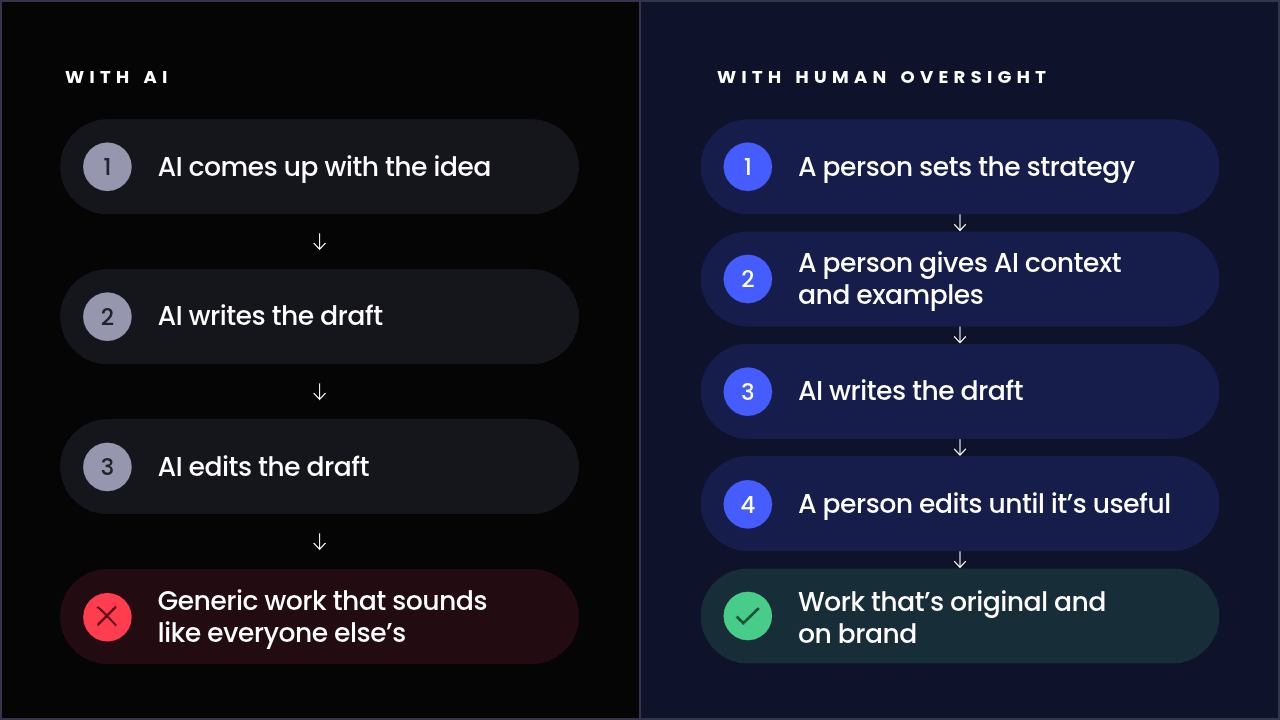
Many businesses now let AI generate everything, from the first idea to the final draft. They hand their thinking over to the tool, then pile more AI output on top of what it already made.
The end result is generic, empty work that sounds, looks, and feels like everyone else’s.
On the other hand, effective human oversight starts before AI writes a single word.
A person sets the strategy and does the thinking, then writes a clear prompt and gives their AI the background, examples, and custom ideas it needs to deliver quality output.
Once their AI responds, that same person should be revising, polishing, and editing the output until it’s unique and useful to whoever is consuming it.
If you’re using AI to automate routine tasks in your business, those processes need a different kind of oversight. Here, people need to step in at the points where human judgment matters most, like making a final decision or checking the data AI produced.
The key takeaway is that everything your brand sends out or processes in-house reflects your value and shapes how much customers trust you.
So think of human oversight as the insurance policy that keeps Artificial Intelligence from costing you.
What Goes Wrong When No One’s Checking
So what happens when that insurance policy isn’t in place?
What does it look like when you’re using AI but haven’t put a person at the right touchpoints? It goes without saying that the risks can be higher than a few typos or a bland blog post.
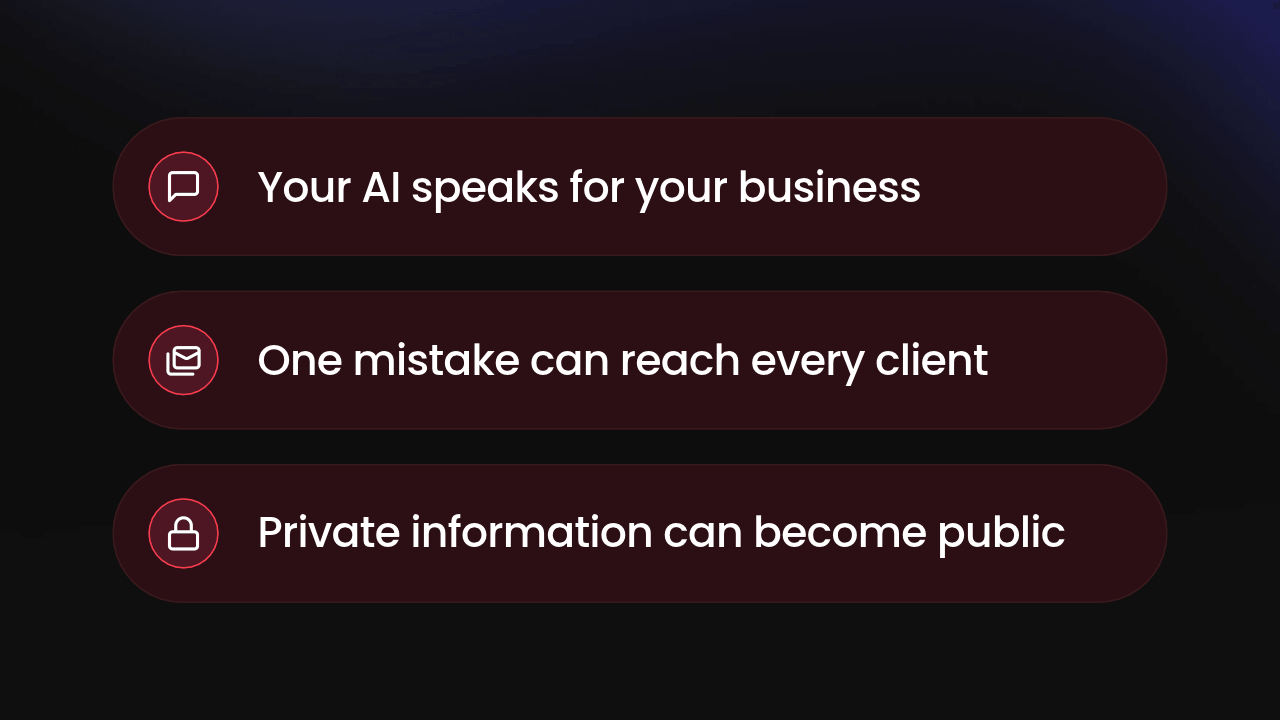
- Your AI Speaks for Your Business
Customers don’t see a difference between your AI and your business.
If your chatbot quotes the wrong price, promises a refund you don’t offer or gets a policy wrong, your business has subsequently made that promise, too.
Saying “the AI got it wrong” won’t get you off the hook either. Businesses can be held legally responsible for wrong information their chatbots give customers, and it’s already happened.
Without a person checking what your AI is allowed to say, produce, or document, every customer conversation carries a risk you can’t see.
- One Mistake Can Reach All of Your Clients
AI automations are built to run on their own.
That’s what makes them so useful, and it’s also what can make them risky.
If an automation isn’t set up properly, nothing stops a bad message from reaching your clients. An email could go out with the AI’s own notes, instructions or placeholder text still in it.
And because automations repeat, that same mistake can land in dozens or even hundreds of inboxes before anyone notices.
For a business that depends on client trust, that’s hard to walk back.
Private Information Can Become Public
AI works best with context.
But without clear rules and someone watching, that context could include sensitive customer details, financial records and even passwords. Once that information of that nature leaves your systems, you can’t take it back. One careless upload can turn into a privacy breach, a compliance problem or even serious legal consequences.
Finding The Right Balance
After you hear about what can go wrong, it’s tempting to check everything.
And even though that feels safe, overdoing oversight can quickly turn into a tedious full-time job with work piling up for review, and automations only moving as fast as the person approving them.
Basically, you end up paying for AI’s speed without getting any of it.
The goal is to check the right things at the right time, and there are three principles that can help you find the right balance.
- Do The Thinking Before AI Does The Work
As we mentioned earlier, before you open an AI tool, decide what you want and why.
Who is this for?
What should they know or do after reading it?
Then give AI what it needs to get there: background on your audience, examples of work you like, and the ideas that make your take different.
The more hands-on your input, the less you’ll have to fix later.
- Put Checkpoints Where Mistakes Would Hurt
You don’t need to review every step, but it’s worth mapping out your process and marking the points where an error would reach a customer, change a decision, or create bad data.
Those are the spots where a person needs to step in. For content, that means editing the output for accuracy and voice. For automations, it means checking key decisions and any data AI creates.
Let the low-risk, repetitive steps run on their own.
- Have a Person Sign Off on Anything That Reaches Other People
Before anything goes to a customer, client or coworker, a person should approve it.
And make it clear who owns that sign-off for each type of work.
If delegation is the bottleneck, a project management system can help. These systems allow you to assign reviewers, track approvals and make sure nothing slips through, all without slowing your team down.

Making Human Oversight Work For Your Business
AI will keep getting faster and smarter. That part’s a given.
But the better AI gets, the harder it is to stand out with it. When every business can produce the same polished email or report in seconds, the output alone stops impressing anyone. What customers notice is the thinking behind it, and whether anyone checked it before it reached them.
So the question from the start of this article only gets more important. If everyone has the same tools, what sets your business apart?
It’s the judgment your team puts around the work AI does. The businesses that pull ahead over the next few years will be the ones that know exactly where their people fit. They’ll do the thinking up front, check the points where mistakes would hurt, and have a person sign off before anything reaches a customer. AI handles the rest.
If you get that right, AI will help you move faster without putting your customers, your data, or your reputation at risk.
Your website chatbot is a good place to start, since it’s often the first to greet your customers.
To help, we’re sharing our free Custom GPT Assistant Template, the same instructions we use with our clients, so you can set clear rules for what your chatbot says and when it brings in a person from your team.

You may also like

Data & CRM
January 5, 2025
How to Streamline Content Auditing with Automated Publish Date Extraction
Automate publish date extraction to streamline content audits, boost SEO, and analyze trends. Save time and gain insights with step-by-step automation.

Search Engine Marketing
June 21, 2022
Google Ads Audit 101: An Easy and Effective Checklist to Download
Increase ad performance with a Google Ads Audit. Use this easy checklist to optimize campaigns, identify gaps, and capture consumer attention effectively.
Get in Touch


